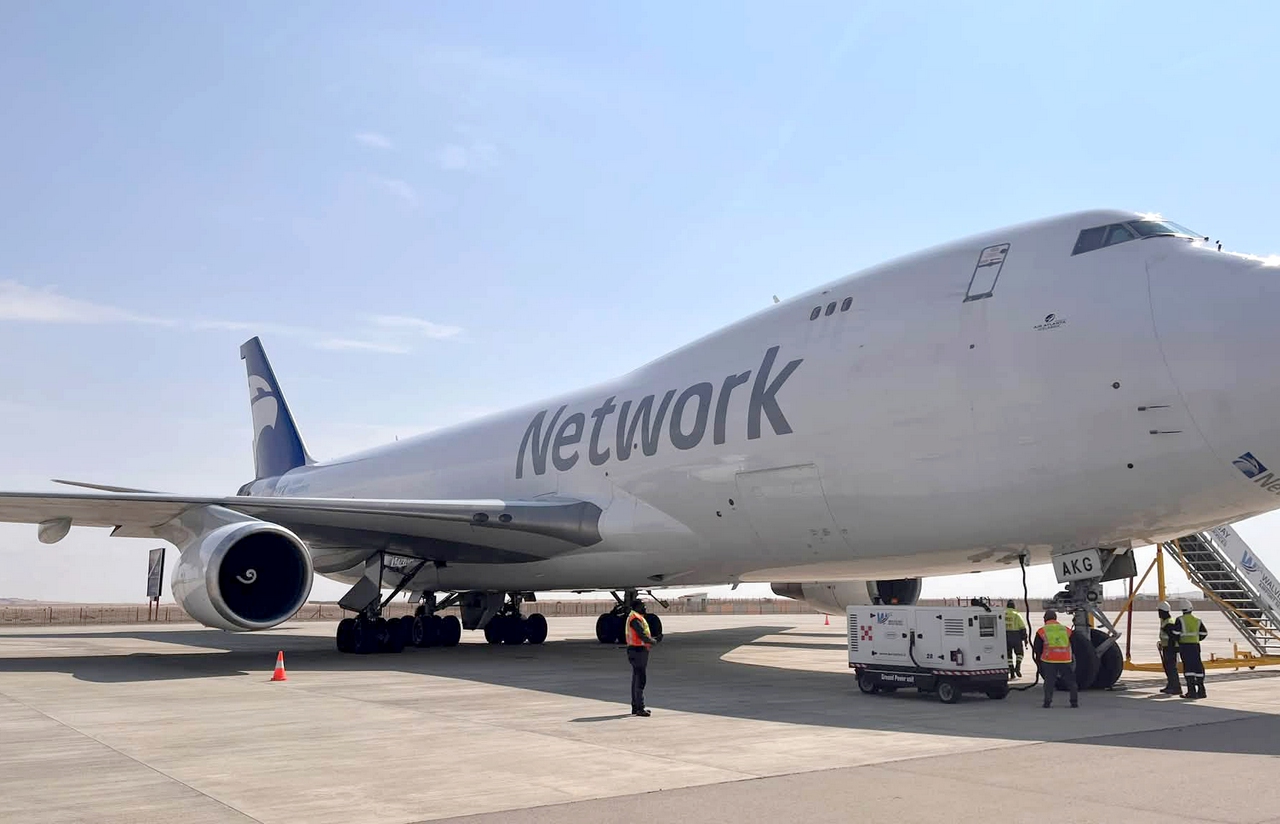
With the aim of significantly reducing the carbon footprint of the heavy metals industry, HyIron’s Oshivela Green Iron production plant is a ground breaking initiative, and the first of its kind in Africa.
In the past few month various large production plant equipment has been imported through Walvis Bay and transported to the Oshivela Plant site. Woker Freight Services is honoured to be a part of this historic initiative and provided various logistics services including clearing and forwarding. Rennies Transport transported the equipment to the site, while Walvis Bay Stevedoring managed the offloading operations.
The recent equipment imports included two large tanks weighing some 26 tonnes that were shipped from China onboard the vessel Win V.CAF702. The size and weight of these massive tanks posed a challenge to offload, however was safely delivered to the production site. The other imports comprised a rotary decomposition furnace and 4 auxiliaries (the 4 x large crates) that were shipped from Germany onboard the Macs vessel, Bright Sky. The crates each weighed a whopping 92,6 tonnes. Offloading and transporting 22m long heavy crates took some stevedoring finesse and careful offloading planning.
The solution was to use two cranes in tandem to lift the crates off the vessel and on to the trucks. Then the crates were lifted from the truck with two port cranes to the ground in port and loaded again with another set of cranes once they were ready to head to site. Added to this challenge was the availability of cranes.
HyIron uses green hydrogen in a rotary kiln to reduce iron ore—completely carbon-free. This process saves 1.8 tonnes of CO₂ emissions for each tonne of iron produced, compared to traditional methods. The Oshivela Plant in Namibia will avoid 3.6 million tonnes of CO2 emissions annually while creating some 900 permanent and 6,000 construction jobs.
Iron production is an energy-intensive process to remove oxygen from iron ore, turning it into a raw material for products like cars and buildings. Annually, 1.9 billion tonnes of iron is produced. Heavily dependent on fossil fuels, iron production contributes around 8% of global greenhouse gas emissions. The demand for iron is projected to increase to 2.2 billion tonnes/year by 2030, implying an annual increase of 50 million tonnes. Green iron production helps to meet this demand while taking responsibility for future generations and contributing to a healthy, sustainable planet.
Read more about this project at: https://hyiron.com/
Find out more about how the various Manica teams can simplify your equipment, plant and mining logistics:
Woker Freight Services
Clearing & Forwarding, Imports & Exports ---- sales@wfs.com.na
Rennies Transport
Transport ---- transport@rennies.com.na
Walvis Bay Stevedoring
Stevedoring, Cargo offloads ---- contact@wbs.com.na